Being a Mess in Front of People Without Flinching Is Actually Kind of a Superpower
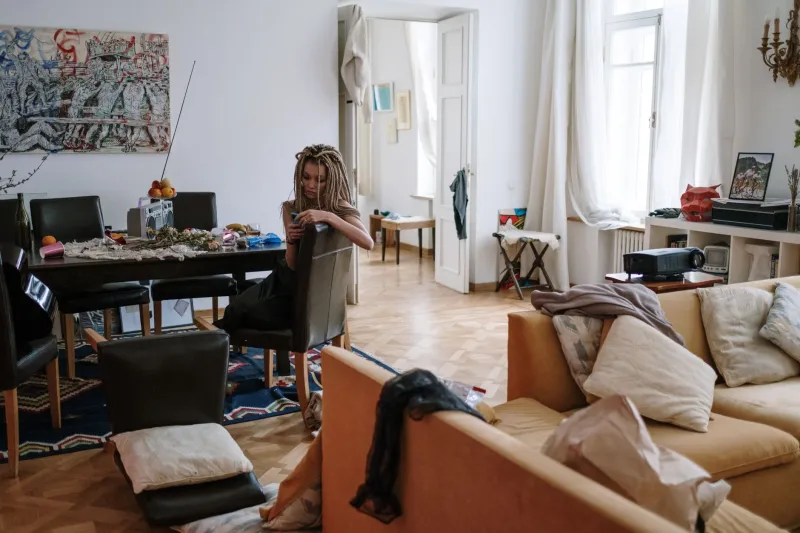
I left a pile of laundry on my bedroom floor for eleven days once. Not because I forgot it was there. Because every time I looked at it, I thought, I'll deal with that when I'm more on top of things. Like being "on top of things" was a destination I'd eventually arrive at, and only then would I deserve a clean floor.
That's a ridiculous way to live. And yet.
Most of us are walking around with some version of this deal we've made with ourselves — some invisible threshold we have to cross before we're allowed to stop apologizing for who we are. Before we can let someone see the laundry pile, literal or metaphorical, without immediately explaining it away.
The Version of Self-Acceptance Nobody's Selling
Here's the thing about self-acceptance that the wellness industry conveniently glosses over: it's not about loving yourself in some grand, affirmational sense. It's not about posting a no-makeup selfie or writing a vulnerable LinkedIn post about your "journey." Those things might be part of it for some people, but they're not the core of it.
The real version — the one that actually changes how you move through the world — is much less photogenic. It's about reaching a point where your contradictions, your failures, and your genuinely weird habits stop feeling like disqualifications. Like they're not evidence that you're broken or behind or fundamentally not quite right.
And here's what I've started to notice: not everyone gets there at the same pace. Some people never get there at all. And the gap between those who do and those who don't has a lot to do with factors that have nothing to do with willpower or mindset.
The Comfort That Costs Something
There's a specific kind of ease that some people have — you've seen it. The person who can laugh at themselves without it curdling into self-deprecation. Who can admit they have no idea what they're doing in a room full of people who seem like they do. Who can be visibly, undeniably human in front of an audience without bracing for impact.
That ease is earned, but it's also enabled. It's enabled by a lifetime of experiences — or the absence of certain experiences — that taught you whether being messy in front of others was safe.
If you grew up in an environment where your mistakes were met with patience instead of punishment, where being confused wasn't shameful, where love wasn't contingent on performance — you got a head start. Not a guarantee, but a head start. You learned early that your flaws weren't dealbreakers. That people could see the full picture and still stick around.
A lot of people didn't get that. A lot of people learned the opposite lesson in very clear terms. And they're still unlearning it, quietly, in therapy offices and in 2 AM journal entries and in the small brave moments where they try to let someone in and then immediately regret it.
That's not a character flaw. That's just what it looks like when the lesson goes deep.
What Freedom Actually Looks Like
I want to be careful here, because I'm not trying to romanticize dysfunction or suggest that being a disaster is some kind of achievement. There's a difference between being comfortable with your mess and just being messy. Between self-acceptance and self-indulgence.
But the freedom I'm talking about — the specific kind that comes from genuinely being okay with your own imperfections — is something worth naming, because we don't talk about it enough.
When you stop spending energy managing how you appear, something opens up. You get to be curious instead of defensive. You get to fail without it meaning something catastrophic about your worth. You get to be in a room with people and actually be in the room, instead of running a background process the whole time that's monitoring how you're coming across.
That's not a small thing. That's actually a pretty significant amount of mental and emotional bandwidth freed up for literally anything else.
The Unfiltered Version Is the Whole Point
I've been thinking a lot lately about what it means to live unfiltered — not in the social media sense, but in the actual sense. To not constantly be editing yourself in real time. To not have a permanent internal PR department spinning your every move.
It doesn't mean you stop growing or stop caring about how you affect people. It means you're doing that work from a place of security instead of fear. You're not trying to be better because you're terrified of what you are. You're trying to be better because you actually like yourself enough to want more for yourself.
That's a completely different engine to be running on.
And I think — genuinely — that it's something you can move toward, even if you didn't start from a place where it came easy. It's slow work. It's the kind of thing that happens in the margins, in tiny moments where you decide not to over-explain yourself or pre-apologize for taking up space.
What I'm Still Learning
I'm not going to wrap this up with a tidy lesson, because I don't think there is one. I'm still in the middle of this, same as most people.
I still catch myself doing the thing where I minimize something I made because I'm scared someone won't like it. I still sometimes explain my apartment before anyone gets a chance to form their own opinion about it. I still have a complicated relationship with the laundry pile.
But I'm also getting better at noticing when I'm doing it. At recognizing the difference between genuine humility and preemptive self-erasure. Between being open to feedback and just bracing for rejection.
And on the days when I manage to just... be, without the commentary track running — those days feel different. Lighter. More like mine.
That's what I'm after. Not perfection. Not even polish. Just a little more room to be the whole, contradictory, still-figuring-it-out person that I actually am.
The laundry can wait.